
+918048068101

Currently it only shows your basic business info. Start adding relevant business details such as description, images and products or services to gain your customers attention by using Boost 360 android app / iOS App / web portal.

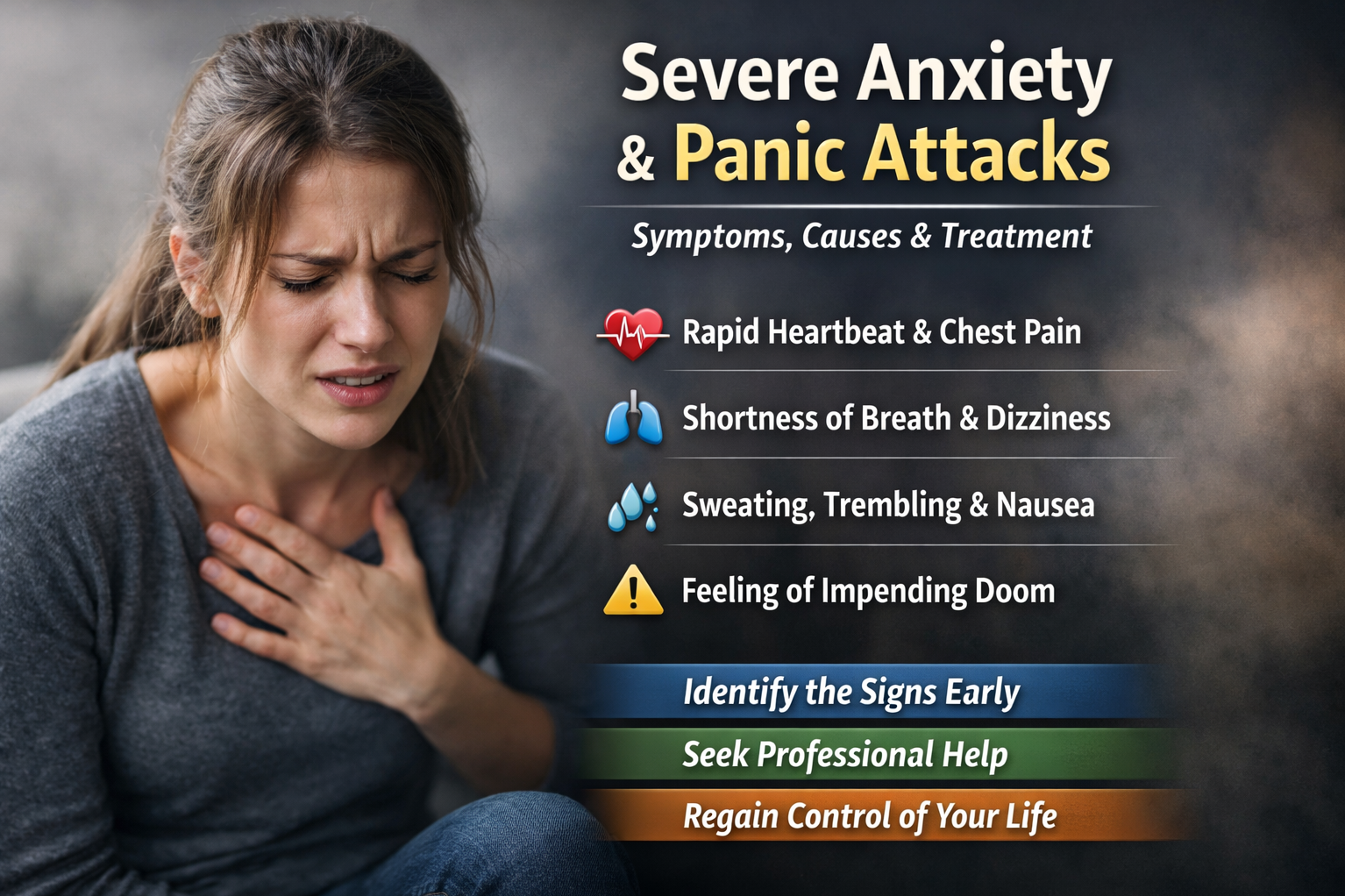
What is Severe Anxiety? Severe anxiety is more than everyday stress—it is a persistent, overwhelming state of fear that interferes with daily life. Unlike mild worry, severe anxiety can cause physical symptoms such as muscle tension, headaches, and sleep disturbances. When left unmanaged, it may escalate into panic attacks, sudden episodes of intense fear that feel uncontrollable. How Severe Anxiety Can Lead to Panic Attacks When anxiety reaches extreme levels, the body’s “fight-or-flight” response becomes overactive. This surge of adrenaline can trigger a panic attack, even without a clear danger. People often describe panic attacks as feeling like a heart attack or losing control. The unpredictability of these episodes can make severe anxiety even harder to manage. Common Symptoms of Panic Attacks Recognizing symptoms early is key to seeking help. Panic attacks often include: • Rapid heartbeat and chest pain • Shortness of breath or choking sensation • Sweating, trembling, or chills • Dizziness or faintness • Nausea or stomach upset • A sense of impending doom These symptoms usually peak within minutes but leave lasting emotional distress. Treatment Options for Anxiety and Panic Attacks 1. Cognitive Behavioral Therapy (CBT) helps reframe fearful thoughts and reduce attack frequency. 2. Exposure therapy gradually confronts feared situations, reducing avoidance. 3. Medications Regaining Control Over Anxiety Severe anxiety can spiral into panic attacks, creating a cycle of fear and avoidance. However, with professional treatment, lifestyle adjustments, and coping strategies, most people can regain control and improve their quality of life. Recognizing symptoms early and seeking help is the first step toward breaking free from the grip of anxiety and panic disorder.


